
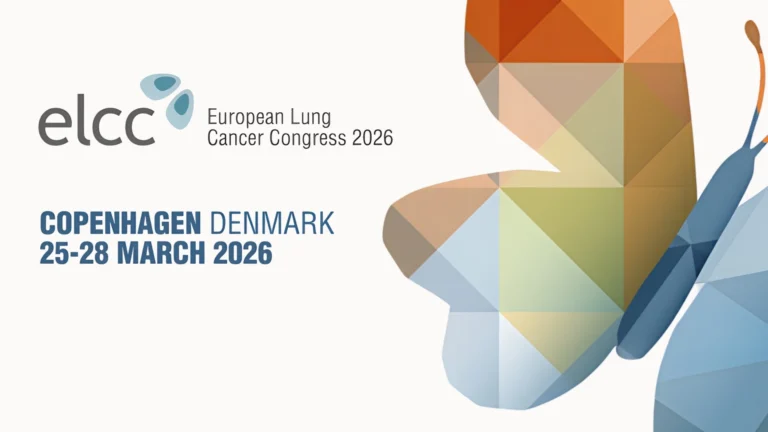
Prof. Paul Hofman, Director of IHU RespirERA, will take part in the European Lung Cancer Congress (ELCC) 2026, a leading scientific congress dedicated to lung cancer and other thoracic malignancies.
Organized by ESMO (European Society for Medical Oncology), this event brings together specialists from around the world to share the latest advances in research, diagnosis, treatments, and patient management. The congress notably highlights translational research, which bridges the gap between scientific discoveries and their practical application to improve patient care.
It is in this context that the ETOP Lungscope project, in which Prof. Paul Hofman is involved, will be presented.
A European project to better understand cancer evolution
The ETOP Lungscope project (European Thoracic Oncology Platform Lungscope Project) is a European research program focused on non-small cell lung cancer (NSCLC), the most common type of lung cancer.
Its objective is to compare the primary tumor—meaning the original tumor—and metastases, i.e. cancer cells that have spread to other parts of the body.
To achieve this, the project relies on a decentralized biobank (a network of stored biological samples) across several partner centers in Europe. It also uses a database containing clinical patient information, linked to samples taken from both the initial tumor and the corresponding metastases in the same patient.
This approach makes it possible to study what scientists call spatial heterogeneity—in other words, the differences that may exist between the original tumor and its metastases. Understanding these differences is essential to develop more accurate diagnostic tools and, ultimately, more personalized treatments.
A large-scale European collaboration
The ETOP Lungscope project is based on strong collaboration between several European countries. As of October 14, 2025, the study included 353 matched cases, with a final target of 600 cases.
In practical terms, this means that researchers have access, for several hundred patients, to samples from both the primary tumor and its metastases. This comparison is particularly valuable for better understanding cancer progression.
Patients included in the study come from the United Kingdom, Switzerland, the Netherlands, France, as well as Germany, Austria, Spain, and Ireland. This multicenter dimension, meaning involving multiple institutions and countries, strengthens the quality and impact of the results.
First key data to better guide patient management
The initial analyses of the project distinguish between two situations:
- Synchronous metastases, detected at the same time as the primary tumor or within three months of diagnosis
- Metachronous metastases, detected more than three months after the initial diagnosis
Preliminary results show a difference in median overall survival, meaning the average survival time observed within a patient group, between these two situations:
- 29.2 months for patients with synchronous metastases
- 45.4 months for patients with metachronous metastases
Researchers also analyzed the most frequent sites of metastases, including the central nervous system, thoracic lymph nodes, and the lungs.
These data help to better understand how cancer develops and spreads. They also contribute to advancing precision medicine, an approach that aims to provide treatments tailored to each patient’s individual profile.
Increasingly detailed biomarker analyses
The Lungscope project goes beyond clinical observation. It also includes in-depth analyses of several biomarkers (measurable biological characteristics that help better understand a disease or guide treatment decisions).
Among the markers studied are PD-L1, CD8, MTAP, CD73, and c-MET. The project also plans further analyses of DNA and RNA, the molecules that carry genetic information within cells.
The goal is clear: to better understand the differences between primary tumors and metastases in order to support the development of future diagnostic tools and clinical trials.
A unique resource for lung cancer research
The ETOP Lungscope project is now considered a unique resource in Europe. It is described as the first multicenter database gathering matched primary NSCLC tumors and their corresponding metastases.
Its presentation at ELCC 2026 perfectly illustrates the major challenges in lung cancer research today: improving understanding of the disease, identifying relevant biomarkers, and developing increasingly personalized approaches for patients.
By presenting the ETOP Lungscope project at ELCC 2026, Prof. Paul Hofman highlights IHU RespirERA’s strong commitment to ambitious European research, aimed at improving the understanding of lung cancer and delivering more precise patient care.
 FR
FR  EN
EN 