
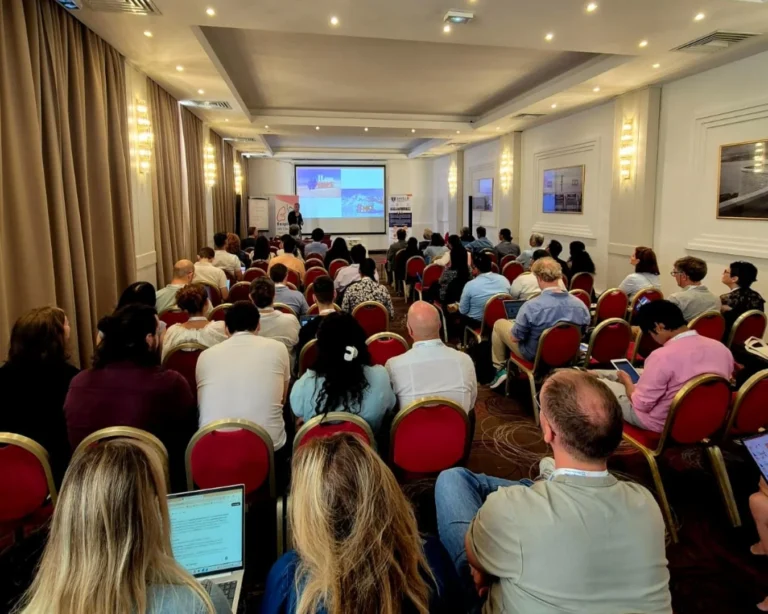
An international congress dedicated to respiratory health challenges
On 17 and 18 June 2026, the Franco-Indian congress was held in Nice under the aegis of the RespirERA Institute and Université Côte d’Azur. This international event brought together more than 20 speakers from the RespirERA Institute and the Indian subcontinent, including representatives from Ashoka University, Indraprastha Institute of Information Technology in New Delhi, and the Indian Institute of Science at Bangalore University.
This scientific meeting provided an opportunity to review new data on the impact of the environment and air pollution on respiratory health, combining several approaches: artificial intelligence (digital tools capable of analysing large amounts of data), translational research (the transfer of scientific discoveries into concrete applications for patients), and comparative studies between major research programmes.
Air pollution: a major public health issue
Air pollution in India is now a major public health issue. It is involved in the rise of several respiratory diseases, including lung cancer, asthma-related diseases and chronic obstructive pulmonary disease, also known as COPD (chronic respiratory diseases that cause long-term breathing difficulties).
As Paul Hofman, Director of the RespirERA Institute and one of the organisers of the international congress, stated:
“Fighting pollution is now an urgent priority to slow the incidence of respiratory diseases.”
The discussions highlighted the need to better understand the effects of air pollution on populations, in order to develop appropriate prevention, anticipation and research strategies adapted to local realities.
Artificial intelligence to better anticipate risks
New artificial intelligence tools are playing an increasingly important role in respiratory health research. During the congress, several presentations showed how these tools can help anticipate the impact of different risk factors linked to air pollution within populations.
By analysing large volumes of environmental, medical and biological data, artificial intelligence can help identify the most exposed populations, better understand the progression of certain respiratory diseases, and support the development of collaborative programmes between French and Indian teams.
Better understanding individual predispositions
Beyond exposure to pollution, speakers also addressed several individual predisposition factors. These include factors that remain poorly understood, such as dietary habits and genetic predisposition, which may increase the risk of developing respiratory diseases.
This work underlines the importance of a comprehensive approach to respiratory health, integrating the environment, lifestyle habits, biological characteristics and population-based data.
Franco-Indian collaborations in respiratory research
The congress also provided an opportunity to present initiatives developed within Indian universities and the RespirERA Institute. Discussions between the different speakers opened the way to the development of collaborative programmes focused on air pollution, artificial intelligence and respiratory diseases.
More fundamental approaches were also presented, with the aim of better understanding the cellular mechanisms involved in the onset and development of certain respiratory diseases, particularly interstitial fibrotic diseases (lung diseases that lead to the gradual stiffening of lung tissue).
 Français
  English (UK)