
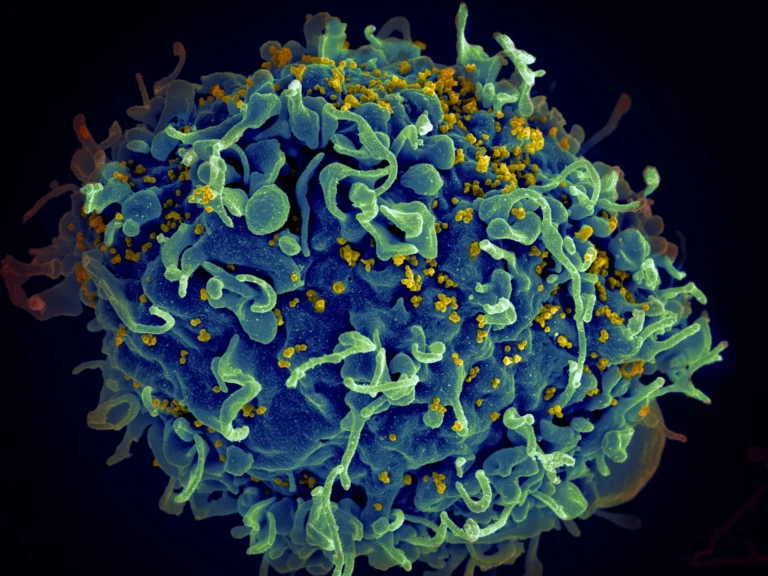
A study published in NAR Genomics and Bioinformatics, with the participation of researchers associated with the RespirERA Institute, highlights a major challenge for the future of cancer immunotherapy: better identifying targets that are truly specific to tumor cells. This work provides an unprecedented map of “shared epitopes”, small protein fragments that may be found both in tumors and in other proteins of the human body.
Helping the immune system hit the right target
Cancer immunotherapy is based on a simple idea: helping the immune system recognize and fight tumor cells more effectively.
To do this, researchers aim to identify targets present on cancer cells. These targets can be seen as “signals” that immune cells learn to recognize. Among these signals are epitopes, meaning small fragments of proteins that can be detected by T lymphocytes (immune cells able to identify and eliminate certain abnormal cells).
However, for an immunotherapy to be both effective and safe, the selected target must be sufficiently specific to the tumor. If the same fragment is also present in other proteins in the body, the immune response may be more difficult to interpret, less specific, or potentially associated with unwanted effects.
This is precisely the issue addressed by the study.
Revealing a blind spot in the selection of tumor targets
The researchers focused on “shared epitopes”. Behind this scientific term lies a simple concept: different proteins can contain exactly the same small fragments.
In the context of cancer, this means that a fragment targeted by an immunotherapy may not be exclusive to the tumor. It may also exist elsewhere in the body.
This observation is important because it invites researchers to examine tumor targets with a higher level of precision. It is not enough to know that an antigen is associated with a tumor. It is also necessary to determine whether the fragments used to trigger the immune response are truly unique, or whether they are shared with other human proteins.
This analysis therefore provides a new criterion to better select the most relevant tumor antigens (elements recognized by the immune system as being associated with a tumor cell) for future immunotherapies.
A large-scale map of the human proteome
To measure the scale of this phenomenon, the researchers carried out a computational analysis of the human and murine proteomes (the complete set of proteins produced by humans and mice).
This approach identified more than 557,000 sequences of 8 amino acids and more than 421,000 sequences of 11 amino acids shared by at least two human proteins. In other words, many small protein fragments are not unique: they can be found in several places in the body.
These results show that shared epitopes are not rare. They represent a frequent phenomenon that should be better taken into account when designing and evaluating cancer immunotherapies.
A new indicator to better assess therapeutic targets
The study also introduces a new indicator called the Shared Epitope Index, or SEI (an index measuring the proportion of fragments in a protein that are also found in other proteins).
This index helps assess how specific a protein is. The higher the SEI, the more the protein contains fragments shared with other proteins. Conversely, a low SEI may indicate a more specific target, and therefore a potentially more relevant candidate for developing targeted immunotherapy.
This indicator could help researchers better prioritize tumor antigens by distinguishing those that may raise biological uncertainty from those offering a more precise profile to guide the immune response.
EpitopeMapper: a useful resource for research
Beyond the scientific results, the study also provides a dedicated tool: EpitopeMapper.
This tool makes it possible to identify sequences shared between different proteins. It offers research teams a concrete resource to analyze potential targets, better anticipate certain limitations, and improve the interpretation of immune responses observed in studies.
In the long term, this type of approach could contribute to the design of more precise immunotherapies by selecting better-characterized targets that are more closely aligned with the biological characteristics of patients.
Expertise at the crossroads of oncology, data and precision medicine
The participation of Olivier Croce, Baharia Mograbi, Paul Hofman and Patrick Brest in this publication illustrates the involvement of the RespirERA Institute ecosystem in work at the interface between biology, oncology, complex data and therapeutic innovation.
This research is part of a precision medicine approach: better understanding biological mechanisms in order to better guide prevention, diagnosis and treatment strategies.
By contributing to this study, the RespirERA Institute is taking part in an important step forward in the understanding of immune responses and in the optimization of future therapeutic approaches against cancer.
This publication sheds important light on an issue that remains insufficiently considered in the development of cancer immunotherapies: the true specificity of tumor targets. By providing a map of shared epitopes and a dedicated tool, this work opens the way to better selection of therapeutic targets, supporting a more precise and safer approach to medicine.
Read the full article: Comprehensive mapping of identical sequences across human proteins emphasizes the widespread issue of shared epitopes in self-antigens, NAR Bioinfo, 2026.
 Français
  English (UK)