
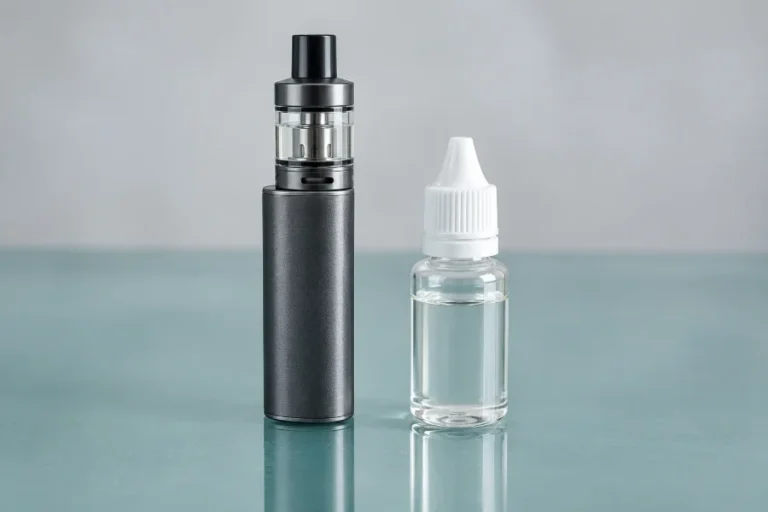
Vaping is not without risks to respiratory health, even when products contain no nicotine. A scientific review involving several members of the RespirERA Institute, including its Director, Professor Paul Hofman, examines the effects of e-cigarettes on the lungs and the challenges of identifying associated damage.
Some smokers use e-cigarettes to help them stop smoking. However, vaping also attracts people who have never smoked, particularly teenagers and young adults. These different situations call for distinct prevention messages.
In the Revue Francophone des Laboratoires, the authors bring together current knowledge about inhaled substances, their effects on the lungs and ways to recognise vaping-associated damage. The review draws on both laboratory experiments and observations in humans.
Inhaled substances go beyond nicotine
E-cigarettes heat a liquid to produce an aerosol (a mixture of fine particles and droplets suspended in the air). Its composition depends on the device, the liquid used and the heating conditions.
Alongside nicotine, the inhaled aerosol may contain solvents, flavourings, substances formed during heating and metals released from components of the device.
Experiments in cells and animals show that several of these substances can cause inflammation, disrupt the lungs’ defences or damage DNA (the molecule that carries genetic information within cells). The absence of nicotine therefore does not make vaping harmless. However, these experimental findings must be distinguished from effects demonstrated in humans.
Respiratory effects vary in severity
The review describes several conditions observed in association with vaping, including coughing, airway irritation, asthma symptoms and inflammatory lung damage.
Severe acute cases have also been reported under the term EVALI (e-cigarette or vaping product use-associated lung injury). Outbreaks described in the United States notably involved products containing THC (the main psychoactive substance in cannabis) and vitamin E acetate, an additive used in some liquids.
These cases highlight how risks vary according to the substances inhaled. They do not mean that all devices and patterns of use carry the same level of risk.
Long-term effects remain difficult to assess
Researchers are investigating the links between vaping and chronic respiratory diseases. These include chronic obstructive pulmonary disease, or COPD (a condition that persistently restricts airflow through the airways), pulmonary fibrosis (diseases that cause lung tissue to become scarred and stiff) and lung cancer.
For cancer, some experimental findings reveal mechanisms that could contribute to its development. Studies in humans have also reported associations, but these are not sufficient to establish a cause-and-effect relationship between vaping alone and lung cancer.
Several factors complicate the interpretation of these findings. Devices evolve rapidly, liquids vary widely, and many users also smoke or have smoked tobacco. Follow-up is also insufficient to assess certain effects after several decades of exposure.
Identifying lung damage requires several sources of information
The review highlights the role of the thoracic pathologist (a doctor who examines cells and tissues under a microscope to diagnose diseases affecting the chest).
The damage observed in people who use e-cigarettes can resemble that caused by other lung diseases. Microscopic examination alone therefore cannot determine whether vaping is responsible.
Diagnosis requires doctors to consider symptoms, imaging, laboratory tests and, when available, lung samples together. It also depends on understanding the person’s vaping habits, including duration, frequency, device and the substances inhaled.
Distinguishing smoking cessation from starting to vape
The authors stress an essential distinction: for a smoker, completely replacing cigarettes with vaping can reduce exposure to toxic substances in tobacco smoke. This should be distinguished from e-cigarette use by someone who has never smoked.
They highlight the value of support from healthcare professionals, with the aim of stopping tobacco use completely and, eventually, stopping vaping. For young people who do not smoke, prevention aims to avoid unnecessary exposure to inhaled substances and the development of nicotine dependence.
Clearer information about these differences, alongside a better understanding of individual consumption habits, can help prevent risks and support healthcare professionals in recognising vaping-associated lung damage.
 Français
 English (UK)
