
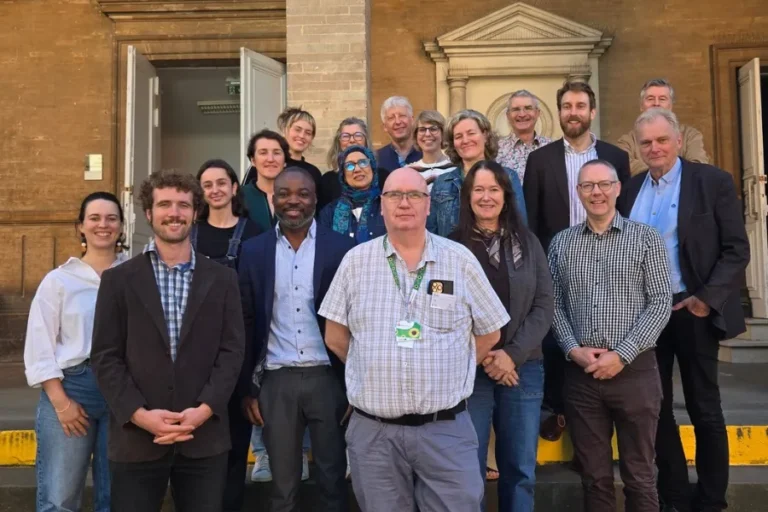
In October 2026, Professor Paul Hofman, Director of the RespirERA Institute, took part in a European workshop in Toulouse. Drawing on a survey conducted on site among 18 European experts, the discussions aimed to identify barriers to the development of precision medicine and artificial intelligence in healthcare, and explore potential ways to overcome them.
Identifying barriers to access to innovation
Precision medicine (an approach that tailors care to the biological characteristics of a disease and the individual patient) relies in particular on access to appropriate tests and treatments. Developing these approaches raises scientific questions, as well as challenges relating to ethics, organisation and equitable access.
The workshop brought together European experts to share their perspectives on these challenges and explore potential solutions. Discussions focused notably on access to therapeutic drugs and tests, alongside the development of artificial intelligence tools for healthcare.
Developing proposals through discussion
A survey conducted in real time among 18 European experts provided the starting point for the collective work. The programme then included thematic discussions, the prioritisation of key issues and the drafting of proposals.
Four topics structured this process: data management and sharing, artificial intelligence tools, stakeholder involvement and equitable access to innovations in precision medicine.
Raising the visibility of patient organisations
Engaging all stakeholders was another focus of the discussions. Particular attention was paid to ways of raising the visibility of patient organisations and involving them more closely in these discussions.
Through his participation, Professor Paul Hofman contributed to a European effort to identify the conditions needed to develop accessible innovations, taking into account the role of patients and other stakeholders.
 Français
 English (UK)
