
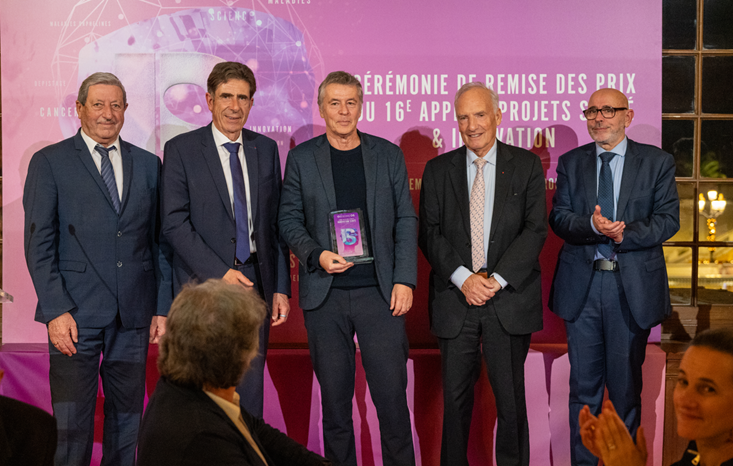
During the 16th Appel à Projets Santé of the Alpes-Maritimes Departmental Council (CD06), the IHU RespirERA was recognised for an ambitious research initiative. By combining artificial intelligence, advanced imaging, and genetics, this project aims to transform lung cancer care.
A technological alliance for ultra-precise diagnosis
The award-winning project is fully aligned with the mission of IHU RespirERA: reducing the impact of respiratory diseases through innovation. It focuses on developing a unique approach that brings together three cutting-edge technologies:
- Histological imaging: Microscopic analysis of biological tissues.
- Genomics: In-depth study of a tumour’s genetic characteristics.
- Artificial intelligence (AI): Algorithms capable of integrating these complex datasets to detect signals invisible to the human eye.
The goal is clear: streamline the patient pathway by enabling diagnosis that is faster, more reliable, less invasive, and tailored to each individual.
Excellence in regional research, united for innovation
The strength of this initiative lies in the synergy across local expertise. It is the result of close collaboration between leading research and healthcare institutions in the region:
- Teams from the Nice University Hospital, represented by Prof. Paul Hofman and Prof. Marius Ilie.
- The IPMC (Institute of Molecular and Cellular Pharmacology) / CNRS, represented by Prof. Pascal Barbry.
- Inria Sophia Antipolis, represented by the teams of Dr Hervé Delingette and Prof. Nicholas Ayache.
This collective expertise makes it possible to develop concrete and innovative solutions to tackle lung cancer.
The decisive support of the Departmental Council (CD06)
Since 2006, the Alpes-Maritimes Department has championed medical innovation through its Appel à Projets Santé. By selecting this project in its 19th edition, CD06 confirms its pivotal role in improving local healthcare services. The initiative benefits from joint funding between the Department and IHU RespirERA, showcasing how public–public partnerships can accelerate research with direct benefits for patients.