
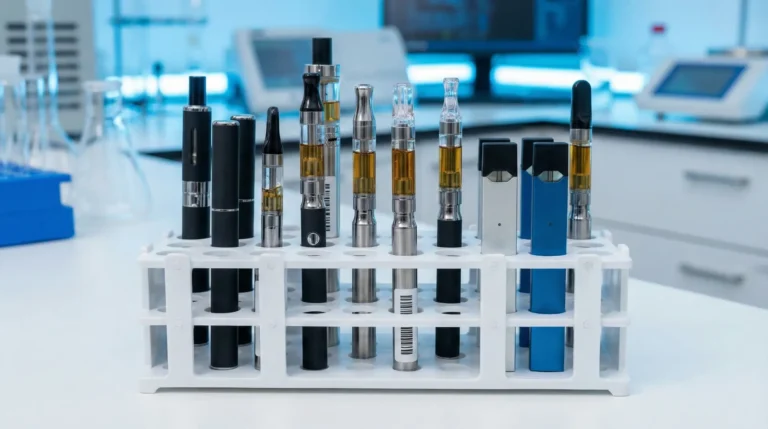
Often perceived as harmless, electronic cigarettes can cause reversible lung damage, but only if use is stopped early enough. In an interview with Nice-Matin, Prof. Paul Hofman, Director of IHU RespirERA, emphasises the need for stronger prevention efforts, especially among young people.
Vaping: a tobacco alternative that is not without danger
Vaping is frequently presented as a less harmful option than conventional cigarettes. While it may serve as a temporary step in a smoking cessation journey, it should never be considered a risk-free, long-term habit.
Speaking at the 11th Conference on New Psychoactive Substances in Nice, Prof. Paul Hofman reminded the audience that all addictive substances (tobacco, cannabis, opioids, cocaine… and electronic cigarettes) can lead to respiratory damage.
Lung lesions linked to glycerol and other compounds
Some vaping liquids contain glycerol, an organic compound that can cause lipid accumulation in lung cells. This overload may lead to lesions detectable on CT scans and under the microscope. These vaping-induced injuries are still underestimated but are increasingly observed in regular users. The positive news: these lesions can improve if vaping is stopped early.
But glycerol is not the only concern. Heavy metals and other components found in certain liquids are now suspected of causing chronic inflammation that may, over time, progress to fibrosis, COPD, or even contribute to cancer development.
A major concern among young people
IHU RespirERA conducts prevention programmes in middle schools, high schools, and universities.
A worrying trend has emerged: many young students begin with electronic cigarettes, convinced they are harmless. This misconception exposes them to real and underestimated risks.
Some countries have adopted strict measures. India, for example, has completely banned electronic cigarettes since 2019.
For Prof. Hofman, the priority is clear: reach out to young people, explain and educate without moralising, and focus on short-term effects, those that resonate most with them.
Emerging threats: new psychoactive substances
Beyond vaping, the conference also addressed the rise of new psychoactive substances (NPS), such as ketamine, amphetamines, and recently developed synthetic compounds.
These substances can cause severe lung injuries, spasms of pulmonary vessels, and chronic asthma-like conditions, particularly affecting young adults aged 20 to 40.
IHU RespirERA’s perspective
In light of these findings, IHU RespirERA’s message is straightforward: strengthen prevention, provide information without stigma, and protect respiratory health from an early age.
Understanding the risks linked to vaping and emerging psychoactive substances is essential to better support younger generations.
