
Understanding and Improving Cancer Care Through Liquid Biopsy
Liquid biopsy is now one of the most promising tools in precision oncology. Unlike a conventional biopsy, which requires the removal of tumor tissue, liquid biopsy is based on a simple blood sample. It allows the detection of biomarkers, such as fragments of tumor DNA circulating in the bloodstream, to identify genetic alterations in cancer and monitor disease progression over time.
This information is essential for offering patients more targeted treatments, better tailored to their disease, while reducing the need for invasive procedures.
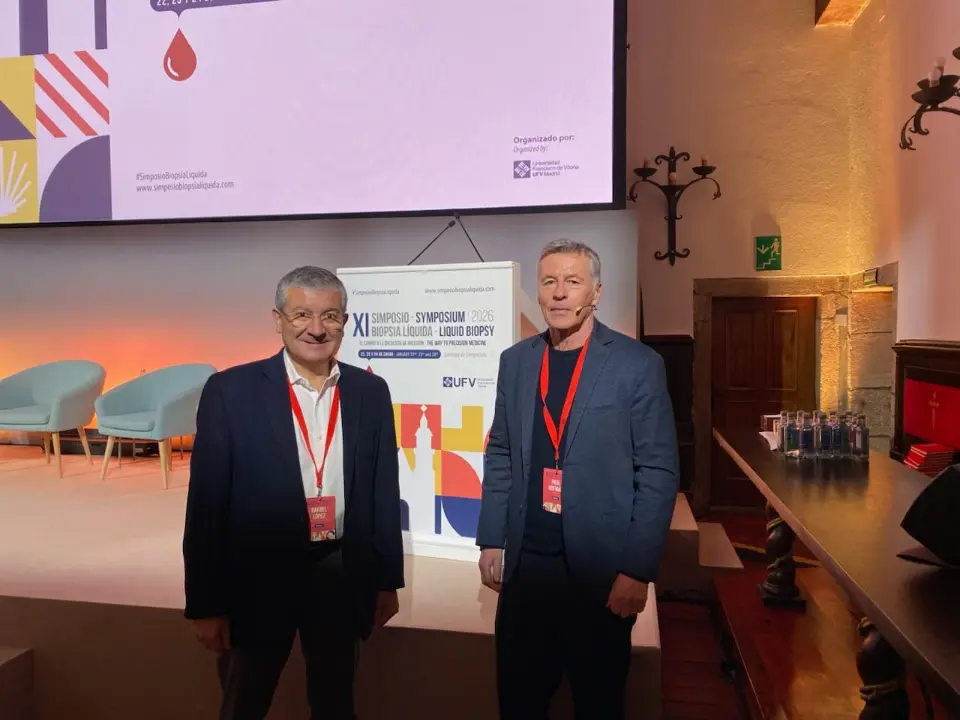
These major challenges were at the core of the 11th Liquid Biopsy Symposium, an international scientific conference dedicated to the latest advances in liquid biopsy and precision oncology.
An International Symposium Dedicated to Innovation in Oncology
This 11th edition of the Liquid Biopsy Symposium has established itself as a key event for oncologists, biologists, pathologists, researchers, and professionals from the biotechnology sector.
The program highlighted:
- current clinical applications of liquid biopsy,
- biological advances in the understanding of cancer,
- technological innovations enabling the analysis of an ever-growing number of genes.
Beyond scientific presentations, the symposium served as a true platform for discussion and collective reflection, aimed at addressing the future challenges of cancer diagnosis and patient care.
Spotlight on Prof. Paul Hofman’s Presentation
Among the invited experts, Prof. Paul Hofman, a renowned pathologist and Director of IHU RespirERA, addressed a key question for the future of liquid biopsy: “Is the decentralization of comprehensive genomic profiling (CGP) liquid biopsy realistic in daily clinical practice?”
Today, some highly complex analyses are performed in centralized platforms, often far from the hospitals where patients are treated. While this model ensures a high level of expertise, it can also lead to longer turnaround times and limit access to these innovative tests.
Prof. Hofman discussed the challenges and opportunities associated with decentralizing liquid biopsy, meaning performing these analyses closer to patients, within local hospital structures, while maintaining high standards of quality and reliability.
This represents a major challenge to enable faster, more equitable, and better-integrated precision medicine within patient care pathways.
Expertise Aligned with the Ambitions of IHU RespirERA
Prof. Paul Hofman’s participation in this international conference fully reflects IHU RespirERA’s commitment to innovation in respiratory health and thoracic oncology.
By contributing to strategic discussions on the organization of genomic testing and access to cutting-edge technologies, IHU RespirERA is actively working to revolutionize patient care, bringing research, diagnosis, and treatment closer together for the direct benefit of patients.