
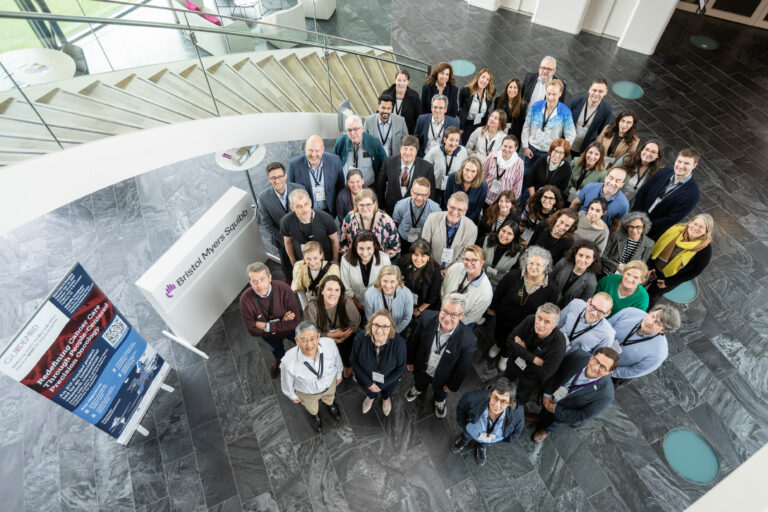
The detection of recurrence after surgery is the major challenge in thoracic oncology. From May 4 to 6, 2026, experts from the European GUIDE.MRD consortium gathered in Boudry (Switzerland) to discuss the progress of the project.
Through the expertise of Pr Paul Hofman, the RespirERA Institute leads the work package dedicated to non-small cell lung cancer (NSCLC), a critical mission to transform research into daily clinical care tools.
Nice Expertise at the Heart of the "Lung Cancer Project"
Under the leadership of Pr Paul Hofman, Head of the Clinical and Molecular Pathology Department, the RespirERA Institute serves as the leading partner for the lung cancer project. The Institute's involvement represents a major operational contribution to European translational research.
The Institute's missions within the consortium include:
- Patient inclusion within the most innovative research protocols.
- Expert management of blood and tissue samples, drawing upon the resources of the Nice Biobank.
- The development of cutting-edge biological tests for Minimal Residual Disease (MRD) detection.
This rigor is essential to guarantee the reliability of analyses on a European scale. The ambition driving the Institute is to offer a reliable, user-friendly, "in-house" biological test for daily practice, enabling rapid evaluation of MRD for early-stage lung cancers.
Review of the Boudry General Assembly
The gathering in Switzerland provided an opportunity to assess technical progress after three years of the project:
- Standardization and Benchmarking (WP2): Experts discussed the development of reference materials to harmonize ctDNA diagnostics across Europe, an essential prerequisite for reliable clinical use.
- Patient Engagement: A session dedicated to the "Patients Advisory Board" highlighted the importance of integrating patients' voices to ensure these technologies address real quality-of-life needs.
- Industrial Reality: The visit to the Bristol Myers Squibb production site allowed for the confrontation of clinical research requirements with the production imperatives of precision therapies.
Liquid Biopsy: Anticipating Relapse
The central objective is to use circulating tumor DNA (ctDNA) to detect traces of cancer that remain invisible to conventional imaging scans. This liquid biopsy technology makes it possible to predict relapses early and adjust treatments immediately following surgery.
By integrating these tools into daily clinical practice, IHU RespirERA and its partners aim to transform post-operative follow-up to guarantee ultra-personalized care for every patient.
 Français
 English (UK)
