
To understand a cancer, doctors generally begin by analysing a fragment of the tumour. This sample helps identify the type of cancer and examine some of its characteristics. However, the sample may be too small, difficult to obtain or no longer reflect the current state of the disease. How can the missing molecular information then be collected without systematically performing another tissue biopsy?
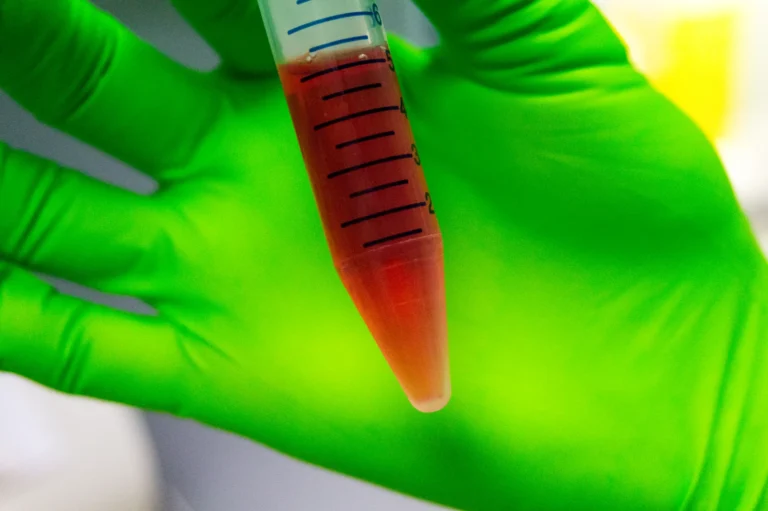
Part of the answer may be found in the blood. Tumours can release small fragments of DNA into the bloodstream. By detecting them, liquid biopsy can provide another piece of the puzzle and complementary information about the tumour.
This is the subject of an expert opinion paper prepared under the auspices of the European Society of Pathology and published online in Virchows Archivon 27 August 2026. It presents neither a new diagnostic test nor the results of a clinical trial. The authors review the available evidence and clarify the role of circulating tumour DNA, or ctDNA, in solid tumours, focusing particularly on lung and breast cancer.
A different view of the disease through blood
Liquid biopsy is based on a simple blood sample. It is less invasive than obtaining another tissue sample and can be repeated as the disease evolves. It may also provide certain genetic information more rapidly and detect molecular changes that have appeared since the initial diagnosis.
Blood, however, does not tell the whole story. Tissue analysis remains essential for determining the precise nature of the cancer, examining the morphology and organisation of the cells, and assessing certain biomarkers. The two approaches are therefore complementary. They provide different information and help build a more complete picture of the disease.
Lung cancer: obtaining molecular information when tissue is limited
The first clinical situation examined in the publication is advanced non-small cell lung cancer. In this setting, identifying certain genomic alterations may help clinical teams select a targeted treatment according to the tumour’s molecular profile.
When tumour tissue is unavailable or insufficient, analysing circulating tumour DNA may help detect some of these alterations more rapidly. When the disease progresses, it may also help identify molecular mechanisms that explain why a treatment is no longer effective.
A negative blood result must nevertheless be interpreted with caution. Some tumours release very little DNA into the bloodstream, and certain alterations may be more difficult to detect in plasma. A negative liquid biopsy therefore does not exclude the presence of a mutation, and tissue analysis may still be required. The authors also emphasise that no single testing sequence is appropriate for every patient. Depending on the clinical situation and the availability of tissue, blood and tissue analyses may be performed successively or in parallel.
Breast cancer: following a tumour as it changes
In hormone receptor-positive and HER2-negative metastatic breast cancer, liquid biopsy has a different role. Under the pressure of endocrine treatments, a tumour can evolve and acquire new resistance mechanisms.
Mutations in the ESR1 gene, for example, may appear during treatment even when they were not detected at the time of diagnosis. Detecting these mutations in the blood can provide a more up-to-date view of the disease and contribute to decisions about subsequent treatment. Liquid biopsy may also provide information about genes involved in the PI3K pathway, including PIK3CA, AKT1 and PTEN.
Here again, however, tissue analysis remains necessary for certain questions. A blood sample cannot, for example, assess the loss of PTEN protein expression. Combining the information obtained from blood and tissue therefore remains essential.
From a test to reliable care pathways
The European Society of Pathology paper highlights a challenge that extends beyond the technical performance of the tests themselves. Liquid biopsy can only support patient care if every stage, from sample collection to analysis and interpretation, meets strict quality requirements.
The authors call for greater harmonisation of practices across Europe, standardised reporting, external quality assessment, appropriate training for healthcare professionals and more equitable access to molecular testing. Pathology and molecular diagnostic laboratories have a central role to play in this organisation, working closely with oncologists and the other professionals involved in patient care.
A publication co-authored by Professor Paul Hofman
Professor Paul Hofman, Director of the RespirERA Institute and affiliated with the Hospital-Related Biobank and FHU OncoAge, is among the six authors of the publication.
The publication supports an integrated approach: using blood when it can provide relevant molecular information, retaining tissue for the analyses that only it can support, and bringing both sets of findings together to better understand how the tumour is evolving.
➡️ Read the full article: Liquid biopsy in solid tumours: expert opinion paper of the European society of pathology. Virchows Archiv. 2026
 Français
  English (UK)