
A key question finally answered by a large-scale international study
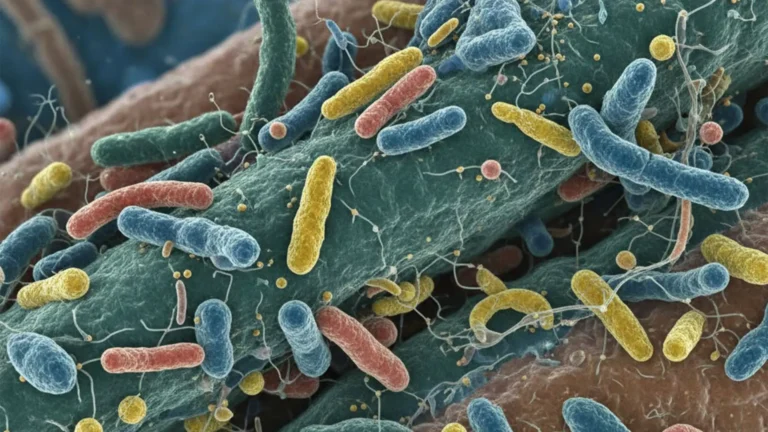
Lung cancer in people who have never smoked now accounts for nearly one quarter of all cases diagnosed worldwide. Yet, the biological mechanisms behind this disease remain poorly understood. In recent years, the potential role of the lung microbiome—that is, the community of bacteria present in the lungs—has attracted growing scientific interest, with sometimes conflicting results.
Published in Nature Communications, a new international study from the Sherlock-Lung project, involving teams associated with the IHU RespirERA, now provides a clear and robust answer to this question.
The largest analysis ever conducted on the lung microbiome in never-smokers
This study represents the most comprehensive analysis to date of the lung microbiome in lung cancer in never-smokers (LCINS). Researchers examined data from 940 patients, based on more than 4,090 samples collected from tumor tissues, adjacent healthy lung tissues, and blood samples.
To ensure reliable results, the scientists combined several state-of-the-art approaches, including 16S rRNA sequencing, whole-genome sequencing, and RNA-seq analyses. This so-called multi-omics strategy allows biological and genetic data to be cross-referenced, reducing the methodological biases observed in some earlier studies.
A key finding: a very limited lung microbiome with no clinical impact
The conclusions are clear and unambiguous:
- The lungs contain a very low bacterial biomass, far lower than that of organs such as the gut.
- A small number of bacterial genera (including Acinetobacter, Corynebacterium, Pseudomonas, and Staphylococcus) can be detected, but without any clinically meaningful link to the disease.
No association was found between the lung microbiome and:
- patients’ age or sex,
- exposure to second-hand smoke,
- tumor stage or overall survival,
- tumor genomic alterations (driver mutations or mutational signatures).
In short, in untreated never-smokers, the lung microbiome does not appear to play a decisive role in the development or progression of lung cancer.
Bringing clarity to a complex field of research
The importance of this study lies not in the identification of a new risk factor, but in the strength of its “negative result.” Thanks to an unprecedented sample size and extremely strict protocols designed to eliminate contamination, the researchers demonstrate that if an effect of the lung microbiome existed, it would have been detected.
This methodological rigor sets a new benchmark for future research and helps redirect scientific efforts toward more promising avenues, such as human genetics or specific environmental factors.
A major contribution from teams in Nice and the IHU RespirERA
The teams based in Nice played a key role in this international study.
The Nice University Hospital (CHU de Nice), Université Côte d’Azur, and the Nice Biobank provided essential biological samples and clinical data, with 78 patients included in the global cohort.
Professor Paul Hofman, co-author of the study, Director of the IHU RespirERA, and a leading figure in respiratory health research in Nice, contributed his scientific expertise and helped ensure the quality of the analyses. This involvement highlights the central role of teams associated with the IHU in major international collaborations aimed at improving the understanding and prevention of respiratory diseases.
A decisive step in guiding future research
By providing a clear and reliable picture of the lung microbial landscape in never-smokers, this study acts as a true “scientific reality check.” It allows weak hypotheses to be set aside and helps focus research on the most relevant levers to improve the diagnosis, prevention, and management of lung cancer.
Link to the publication: Microbiome analysis of 940 lung cancers in neversmokers reveals lack of clinically relevant associations
