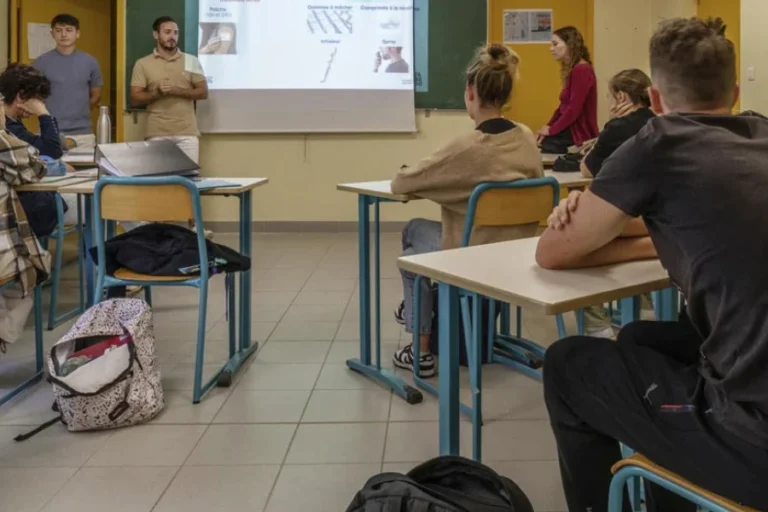
From November 2026, the RespirERA Institute will introduce a smoking prevention programme for students at Don Bosco in Nice. It will combine age-appropriate awareness activities with individual consultations for upper secondary students who want to stop smoking, held at their school throughout the academic year.
Acting early, as habits develop
Adolescence is a time when young people may begin experimenting with products and developing patterns of use. Providing clear information about these products and their effects can help them make informed choices about their health.
The RespirERA Institute’s programme addresses two complementary needs: preventing young people from starting to use these products and supporting those who want to stop. It also aims to develop their critical thinking about misconceptions, peer influence and commercial strategies.
Tobacco, e-cigarettes and disposable vapes: understanding the risks
Prevention needs to address the range of products young people use. The programme will cover cigarettes, vaping, “puffs” (disposable e-cigarettes), shisha and related products.
E-cigarettes carry different risks from smoked tobacco. However, they are not risk-free for respiratory health. Their aerosol (a cloud of fine particles suspended in the air) can contain toxic substances, even when the liquid contains no nicotine. Products containing nicotine (a substance that can cause addiction) also carry a risk of dependence.
Discussions will also address the risk of progressing from vaping to smoking. Studies have observed an association between starting these two behaviours among young people. This association does not mean that every adolescent who vapes will automatically start smoking.
Five stands to learn and discuss at school
Sessions for upper secondary students are scheduled for 24 and 25 November 2026. A prevention trail in the school courtyard will bring together five themed stands, alongside an inflatable structure representing a lung.
1. Recognising marketing strategies
Packaging, product presentation and social media targeting: this stand will help students recognise the techniques used by the tobacco and vaping industries to influence consumers. The aim is to help them assess commercial messages more critically.
2. Understanding the effects on health and daily life
This stand will explore the effects of product use on respiratory health, breathing and physical fitness. Sleep and physical appearance will also be discussed, connecting prevention messages with issues that matter to adolescents.
3. Understanding how dependence develops
Students will learn about the mechanisms of dependence and why it can become difficult to stop using a product. This session will help them better understand patterns of use and the value of support when trying to quit.
4. Testing their knowledge
A quiz about tobacco and related products will give students an opportunity to assess their knowledge and challenge misconceptions. This participatory format will encourage discussion around the answers.
5. Discovering support to quit
A dedicated stand will introduce the individual consultations available at school. Interested students will be able to learn about the planned support and how to begin a quit attempt.
The prevention trail will conclude with an interactive quiz and an inter-class challenge, revisiting the messages explored during the workshops.
Individual consultations throughout the school year
For upper secondary students who want to quit, the awareness activities will be followed by individual appointments at school, during school hours.
These consultations will allow a qualified healthcare professional to assess each student’s product use, needs and wish to stop. Tailored support can then be offered, with follow-up throughout the academic year.
If the healthcare professional considers it appropriate, nicotine replacement therapy (medicines that provide nicotine without tobacco smoke to ease withdrawal symptoms) may be supplied free of charge. Its use will be determined according to the young person’s circumstances and wishes.
By offering this follow-up directly at school, the RespirERA Institute aims to make practical support easier to access and help young people sustain their efforts over time.
Age-appropriate prevention in lower secondary school
Students in troisième, the final year of French lower secondary school, will also take part. A one-hour classroom session is scheduled for 18 November 2026. It will combine a discussion about products, their effects and dependence with an interactive quiz. The aim will be to prevent or delay first use while providing information about available support.
A pilot programme to guide future development
This pilot programme will be evaluated. The assessment will examine knowledge gained, the number of students reached, participation in consultations and quit attempts, and satisfaction among students and school staff.
The findings will help refine the programme and inform its possible introduction in other schools. The ambition is to connect early prevention with accessible support for young people who want to stop smoking.
 Français
 English (UK)
