
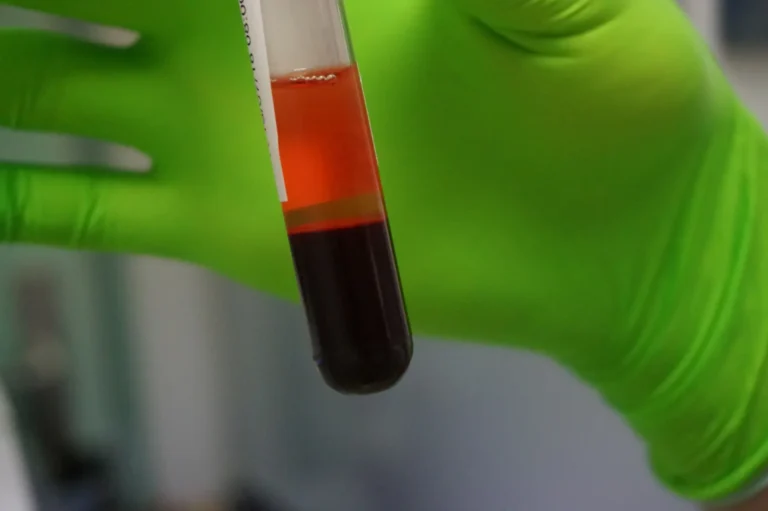
A study co-authored by Paul Hofman and Caroline Lacoux, members of IHU RespirERA, explores the potential of multi-omic liquid biopsy to monitor the evolution of lung cancer treated with sotorasib. Based on a simple blood test, this approach could help detect early signs of treatment resistance.
Better monitoring of a cancer’s resistance to treatment
Non-small cell lung cancer, also known as NSCLC, is the most common form of lung cancer. In some patients, tumor cells carry a mutation called KRAS p.G12C. This DNA alteration can contribute to cancer development and represents a target for specific treatments.
Sotorasib is one of these targeted therapies. It acts specifically on this mutation and represents an important advance for eligible patients. However, over time, some tumors may develop therapeutic resistance (the ability of cancer cells to progressively escape the effects of treatment).
The challenge is therefore to monitor disease evolution more precisely, in order to identify the first signs of recurrence as early as possible.
Liquid biopsy: examining the tumor through blood
Liquid biopsy is based on a simple blood test. It can detect small fragments of DNA released by the tumor into the bloodstream, without the need to directly sample tumor tissue.
The study goes further by using a multi-omic approach. This means that several levels of biological information are analyzed at the same time. The researchers studied both DNA mutations and the methylome (chemical marks found on DNA that influence gene activity without changing the DNA sequence).
In simple terms, genetic analysis helps identify “errors” in the DNA text. Methylome analysis helps understand how this text is used by cells.
An indicator to assess tumor activity
The researchers used a technology capable of analyzing 105 cancer-related genes and 3,400 DNA regions with methylation marks at the same time.
Using these data, they studied a Methylation Index, or MI. This indicator provides information on tumor burden, meaning the presence and activity of the disease in the body.
Its value lies in providing information that complements the search for a single mutation. Even when the KRAS p.G12C mutation is no longer detected in the blood, the MI may reveal that the tumor is still leaving biological signals.
Promising results in patients treated with sotorasib
The study included 22 patients with advanced non-small cell lung cancer carrying the KRAS p.G12C mutation and treated with sotorasib. A total of 91 plasma samples were analyzed at different stages of follow-up: before treatment, around two months after treatment initiation, and at the time of progression confirmed by imaging.
The results show that the Methylation Index evolves in line with the disease status. Before treatment, the KRAS p.G12C mutation was detected in the blood of 40.9% of patients, while the MI was measurable in all patients. In patients responding to treatment, tumor-related signals decreased: the mutation often became undetectable and the MI also decreased.
Conversely, when the disease progressed, the KRAS mutation reappeared or increased in many patients, while the MI rose sharply. These results suggest that this indicator could help detect disease recurrence more effectively.
IHU RespirERA expertise
The involvement of Paul Hofman and Caroline Lacoux in this study reflects IHU RespirERA’s expertise in pathology, biomarkers and liquid biopsy.
Analyzing tumor traces in the blood requires strong expertise in biological sample management, molecular pathology techniques and the interpretation of complex data. These skills are essential to turn laboratory findings into tools that may support patient follow-up.
Supported by the ANR IHU 2023-0007 grant, this work illustrates IHU RespirERA’s commitment to translational research (research that brings scientific discoveries closer to concrete medical needs).
Towards more responsive precision oncology
This study remains a proof of concept, conducted on a limited number of patients. Larger studies will be needed to confirm these findings and assess their potential use in routine clinical practice.
Nevertheless, multi-omic liquid biopsy opens important perspectives. By combining mutation analysis and methylation profiling, it could provide a more complete view of tumor evolution, help anticipate resistance and support more precise therapeutic decisions.
The study by Pepe et al. highlights the potential of multi-omic liquid biopsy to improve the monitoring of lung cancer treated with sotorasib. With the contribution of Paul Hofman and Caroline Lacoux, it illustrates IHU RespirERA’s involvement in the development of innovative tools for more personalized precision oncology.
Link to the full article: Exploring genomic analysis and methylome profiling in longitudinal series of p.G12C KRAS mutated NSCLC patients treated with sotorasib. The Journal of Liquid Biopsy. 2026
 FR
FR  EN
EN 