MARATHON DES ALPES-MARITIMES NICE-CANNES 2026

Nice-Cannes Marathon: your final reminders before the start

With the Marathon des Alpes-Maritimes Nice-Cannes approaching, the RespirERA Institute shares practical guidance for the final days and race day itself. Whether you are running the marathon or a relay leg, prepare with your distance, training and usual sensations in mind.

Previous RespirERA articles explored the links between nutrition and respiratory health, and the role of breathing in running. With just days to go, how can you turn these insights into useful race-day habits?

REFLEX 1 OF 4

The final days: preserve your energy

The final week is about arriving ready to run. Follow the reduced training load planned for this stage of your preparation, and resist the temptation to make up for a missed session.

Take care of the practical details too: clothing, transport, access to the start and, for relay runners, your changeover location. Planning ahead helps avoid unnecessary walking and last-minute rushing on race morning.

REFLEX 2 OF 4

Food and drink: stick to what you know

Dr Raphaëlle Varraso · Epidemiologist at RespirERA Institute

As Dr Raphaëlle Varraso explains, nutrition supports energy availability, muscle function and recovery. Its effects on health develop over time; no single food will instantly improve your breathing.

As race day approaches, choose meals and a breakfast you have already tried during training. Everyday healthy eating advice should not lead you to suddenly increase your fibre intake just before the start.

For drinks and race fuel, stick to what you know you tolerate. Drink according to your thirst, without feeling obliged to drink at every opportunity.

REFLEX 3 OF 4

At the start: ease into your race

The atmosphere at the start can make you speed up almost without noticing. Base your effort on what you planned during training rather than on the pace of the runners around you.

Your warm-up depends on your distance, usual routine and individual needs: it does not have to be long or intense for everyone. Focus on easing gradually into your effort.

Once you are running, pay attention to your breathing. If it becomes much harder than usual within the first few minutes, slow down. There is no need to impose a fixed number of steps per breath: let your breathing remain natural and suited to your effort.

REFLEX 4 OF 4

During the race: adjust your effort to how you feel

Breathing faster is a normal part of exercise. If the effort becomes difficult to sustain, slowing down or walking can be part of managing your race.

However, sudden or unusual breathlessness, chest pain or feeling faint mean you should stop exercising and seek immediate help from the medical team. These signs should not be treated as just another challenge to push through.

A word from Professor Paul Hofman (Director of the RespirERA Institute)
“Good preparation also means listening to your body and your breathing.”

The RespirERA pre-race checklist

Pack your bag the night before.
Gather your race number, clothing and equipment you have already used during training.

Check where you need to start.
Plan your journey and arrival time; for the relay, confirm your changeover location.

Stick to your usual pre-run breakfast.
Choose the breakfast you have already tested before training runs.

Keep something in reserve at the start.
Let others pull ahead if their pace takes you beyond your planned effort.

Plan for after the race too.
Have dry clothes, something to eat and time to recover.

After the finish: make time to recover

Once your race is over, take time to check how you feel, change your clothes and recover. Your body deserves that attention after the finish too.

Explore these topics further

Read the previous RespirERA articles to learn more about the links between nutrition, breathing and preparation.

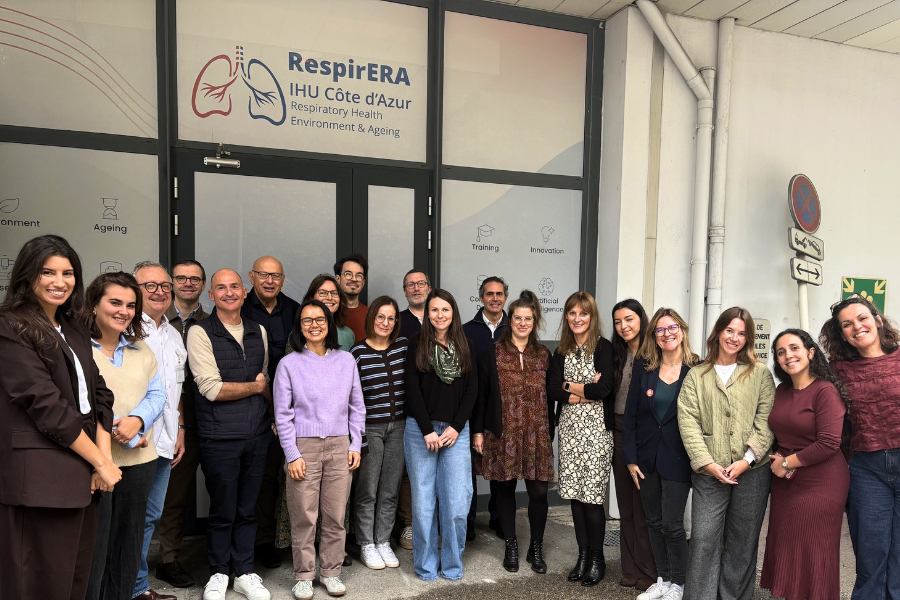
Participants réunis à Nice pour le deuxième atelier IMPULSION.
Featured
Simplifying the IMPULSION lung cancer screening pathway
In Nice, the RespirERA Institute brought together patients and professionals to make it easier for IMPULSION participants to enrol, access their results and keep track of follow-up scans.
Visual for the 8th edition of Lung Cancer a New Vision, featuring the event title and an illustration of lungs.
Congress
Lung cancer: Professor Paul Hofman takes part in Lung Cancer a New Vision 2026
As a scientific committee member at Lung Cancer a New Vision 2026, Professor Paul Hofman contributed to discussions on treatment approaches and pathology and surgery reports.
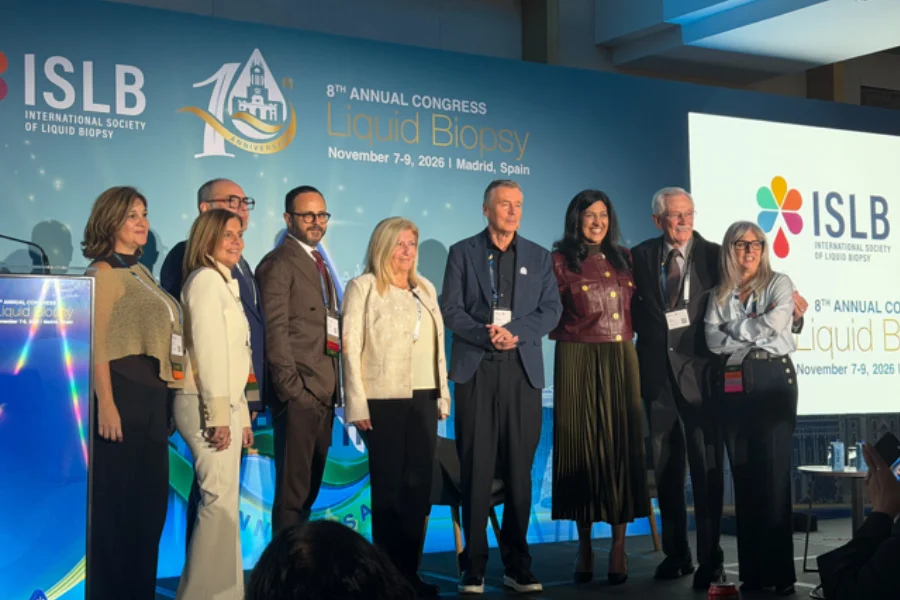
Professor Paul Hofman receives the Research Award at ISLB 2026 in Madrid.
Congress
Liquid Biopsy: Professor Paul Hofman honoured at ISLB 2026 in Madrid
In Madrid, Professor Paul Hofman attended ISLB 2026 and received the Research Award in recognition of his contributions to liquid biopsy research.
symposium PONS à Mannheim
Congress
RespirERA’s biobank and liquid biopsy research presented at the PONS symposium
At the PONS symposium in Mannheim, Prof. Paul Hofman presented RespirERA’s biobank and research conducted using its collection of liquid biopsy samples.
Events
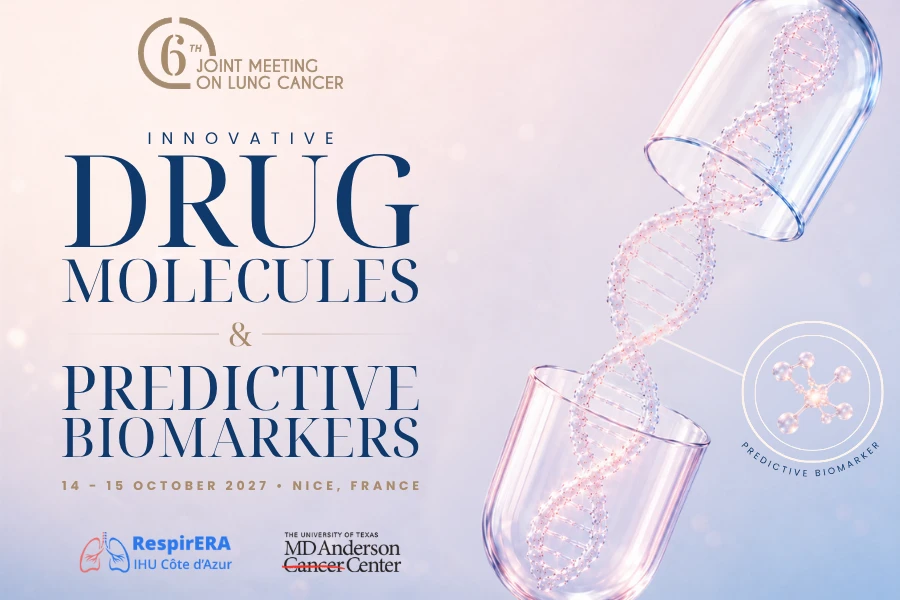
6th Joint Meeting on Lung Cancer in Nice on October 14–15, 2027
10/14/2027
- 10/15/2027
On October 14 and 15, 2027, in Nice, RespirERA will bring together international experts to discuss therapeutic innovations and predictive biomarkers in lung cancer.
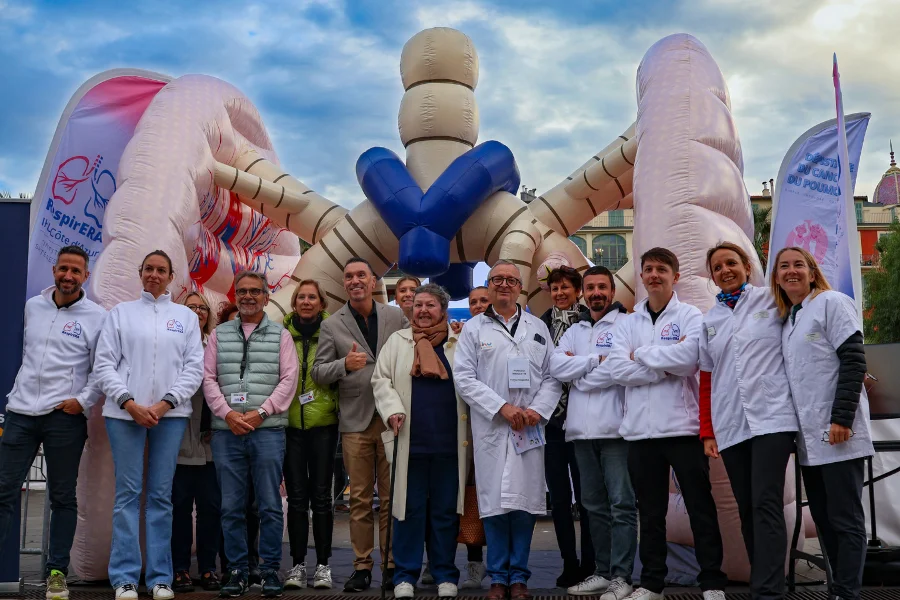
Photo devant le poumon géant à l'occasion du Parcous Santé Respiratoire de l'IHU RespirERA.
Social and media events
The Respiratory Health Trail Brings Prevention to the Public in Nice
A look back at the November 4 Respiratory Health Trail in Nice, a prevention event organized by RespirERA Institute and its partners, with Guillaume Néry taking part.
Microscopic examination of a tumor tissue sample.
Publication
Lung Cancer: Understanding Tumors to Tailor Treatment from the Early Stages
Professor Paul Hofman coauthored an article exploring how biomarker testing can help guide treatment decisions in early-stage lung cancer.
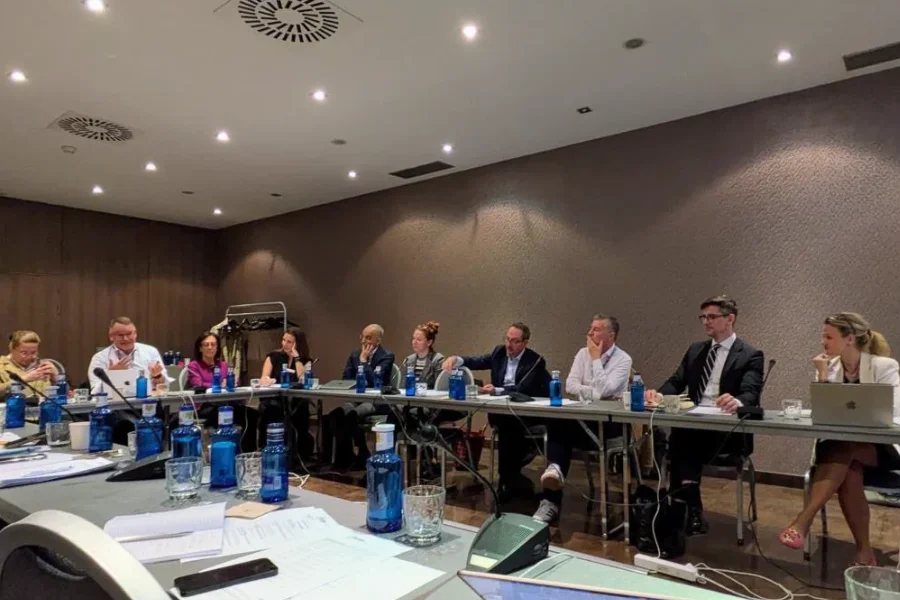
Meeting at the ESMO 2026 Congress in Madrid.
Congress
RespirERA Institute at ESMO 2026: biomarkers and precision medicine
At ESMO 2026, Professor Paul Hofman attended the ECGP meeting and contributed to ETOP Lungscope research on a lung cancer biomarker.
Illustration of tumour cells inspired by fluorescence microscopy, accompanying research into resistance to lung cancer treatments.
Publication
Lung cancer: understanding resistance to guide treatment choices
A study with Professor Paul Hofman explores resistance to ALK-targeted lung cancer therapies and the value of repeat genetic testing.
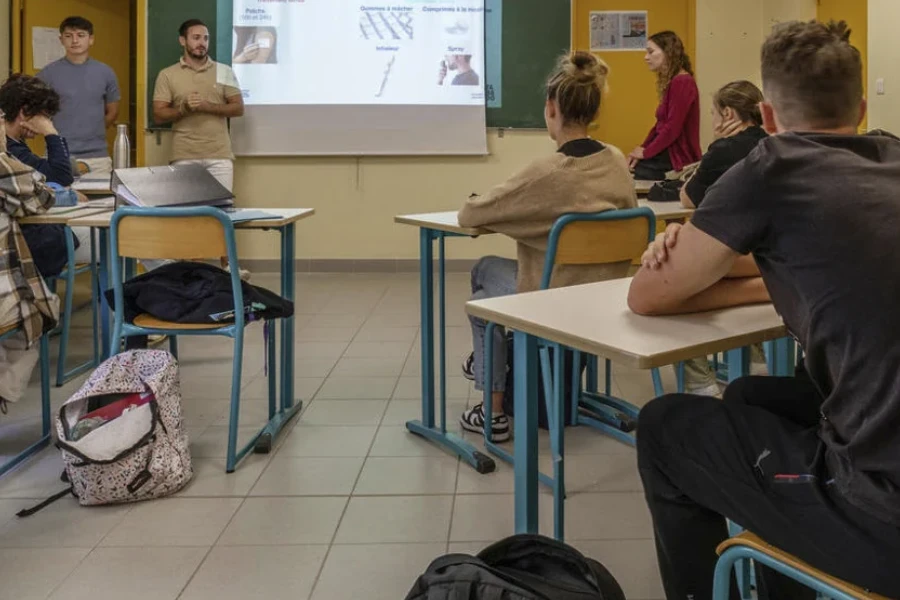
Tobacco prevention program in a high school classroom.
Featured
Preventing smoking: the RespirERA Institute supports young people at Don Bosco in Nice
At Don Bosco in Nice, the RespirERA Institute will combine five prevention stands with individual consultations to support upper secondary students who want to stop smoking.